

7 Durable Men's Belts for Jeans That Last for Years
Last Updated: October 25, 2026
Quick Summary
The most durable mens belts for jeans use a top-grain leather strap, a solid zinc alloy buckle, and a 3.5 cm width that holds heavy denim without bowing. Our top pick is the ILC Men's Top-Grain Leather Ratchet Belt at $59.99, which adjusts in small increments with no visible holes. Every ILC belt is built around those three requirements.
- Look for a strap in the 3.5-4 mm range, since thinner straps fold under heavy denim.
- Check for tight lockstitching at roughly 6-8 stitches per inch at the buckle attachment.
- Measure around your body over your jeans rather than ordering by your trouser size.
- ILC belts have a maximum fastened circumference of 47 inches.
- If you are between sizes on a ratchet belt, size up and shorten the cut-to-fit strap.
Table of Contents
- Quick Comparison: Durable Men's Belts for Jeans
- What Makes a Belt Durable Enough for Heavy Denim
- 1. ILC Men's Top-Grain Leather Ratchet Belt: Best Overall for Jeans
- 2. ILC Men's Top-Grain Leather Classic Buckle Belt: Best Classic Look
- 3. ILC Top Grain Leather Ratchet Belt & Wallet Gift Sets: Best Coordinated Pair
- 4. ILC 5-Piece Elite and Executive Gift Sets: Best Full Wardrobe Upgrade
- How to Measure Belt Size Correctly for Jeans
- Why a Top-Grain Leather Belt Outlasts Cheaper Options
- Frequently Asked Questions
Quick Comparison: Durable Men's Belts for Jeans
The short answer: durable mens belts for jeans need a top-grain leather strap, a solid zinc alloy buckle, and a width that holds heavy denim without bowing. Every I Look Classy belt is built around those three requirements.
Below is the full lineup, from a single everyday belt to a five-piece wardrobe upgrade.
| Belt | Price | Strap Width | Buckle Type | Best For |
|---|---|---|---|---|
| ILC Top-Grain Leather Ratchet Belt | $59.99 | 3.5 cm | Automatic ratchet | Best overall |
| ILC Top-Grain Leather Classic Buckle Belt | $59.99 | 3.5 cm | Classic automatic | Best classic look |
| ILC Ratchet Belt & Wallet Gift Set | $125.99 | 3.5 cm | Automatic ratchet | Best coordinated pair |
| ILC 5-Piece Elite Gift Set | $248.99 | 3.5 cm | Automatic ratchet | Best full wardrobe upgrade |
| ILC 5-Piece Executive Gift Set | $248.99 | 3.5 cm | Classic automatic | Best for classic dressers |
Browse the full belts collection to compare colors and sizes side by side.
What Makes a Belt Durable Enough for Heavy Denim
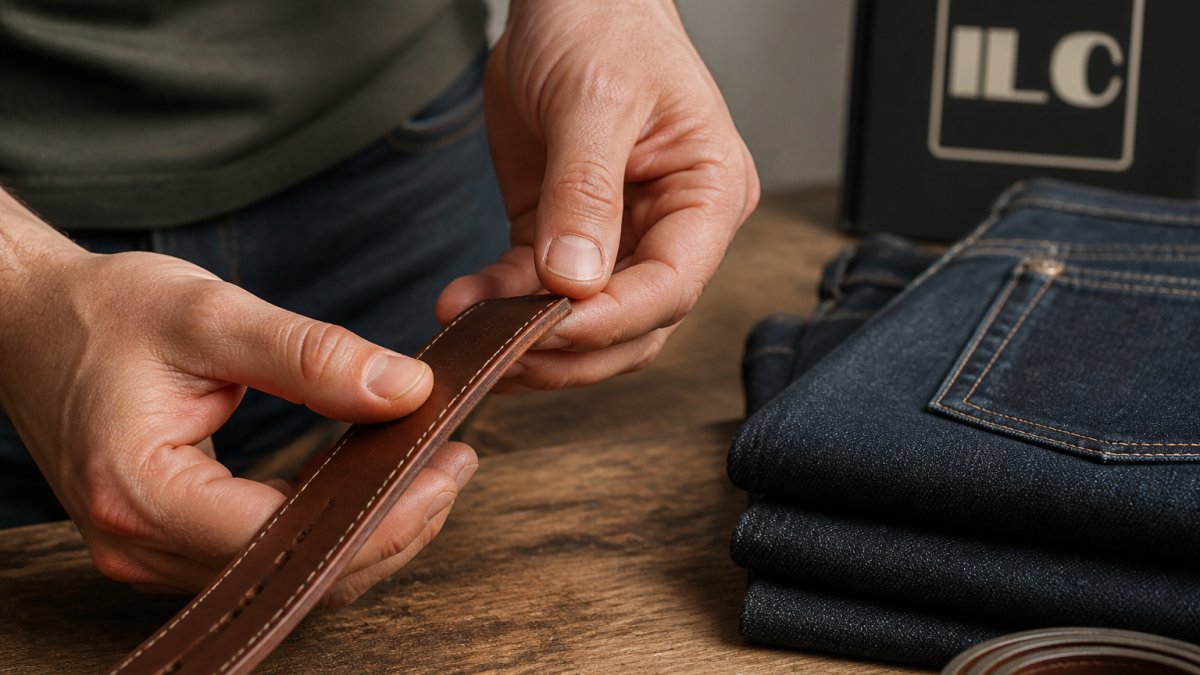
Heavy denim punishes weak belts: stiff fabric, tight loops, and a strap that bends sharply every time you sit. Surviving that takes a leather core that resists cracking and a buckle attachment that will not tear loose.
The Four Failure Points to Inspect Before You Buy
Durability comes down to four construction decisions, each with a visible tell.
**1.
2. Edge finish. Raw or painted edges wear through and delaminate; burnished, waxed, or stitched edges seal the layers.
3. Stitch type and density. Stitching is structural. Look for a lockstitch with tight, even spacing, roughly 6-8 stitches per inch.
4. Buckle attachment. This is where most belts die.
Leather Grades: Full-Grain, Top-Grain, Genuine, and Bonded
Leather labels are not standardized. Here is how the grades differ in longevity.
Full-grain leather is the top layer of the hide with the grain intact. Its dense, interlocked fibers resist cracking and develop a patina.
Top-grain leather has the outermost layer sanded slightly for a cleaner finish.
Bonded leather is scraps and dust glued to a backing and coated.
For a deeper walkthrough, read our guide on how to identify durable top grain leather.
Buckle Strength and Strap Construction
A buckle should be cast metal, not stamped sheet metal. If you are weighing ratchet against traditional prong buckles, our comparison of ratchet belt vs traditional belt breaks down the tradeoffs.
Watch out: cutting a cut-to-fit strap before checking the fit is the most common mistake we see. Cut or altered belts cannot be returned for sizing, so try it on first and shorten gradually.
How to Test a Belt's Durability in the Store
Four checks take about a minute:
- Bend test. Fold the strap back on itself at the buckle end. A durable strap flexes and returns; a weak one leaves a sharp crease or shows a white stress line.
- Edge test. Run a thumbnail along the cut edge. Sealed, burnished, or stitched edges resist; painted or raw edges peel.
- Stitch count. Look at the buckle attachment. Tight, even stitching at roughly 6-8 stitches per inch is a good sign; wide, loose stitching is not.
- Buckle flex. Grip the buckle and twist gently. Cast metal holds; stamped sheet metal flexes visibly.
These checks filter out belts most likely to fail in the first year of daily jean wear.
1. ILC Men's Top-Grain Leather Ratchet Belt: Best Overall for Jeans
Our top pick for jeans is the ILC Men's Top-Grain Leather Ratchet Belt at $59.99.

Available in Black and Espresso Brown. The brown pairs naturally with denim and brown shoes.
What works: precise adjustment, no hole wear, and a clean look with jeans or chinos.
What does not: the cut-to-fit strap means you need to measure before you cut. Get that wrong and the fit is permanent.
2. ILC Men's Top-Grain Leather Classic Buckle Belt: Best Classic Look
For the familiar look of a classic buckle without giving up adjustability, the ILC Men's Top-Grain Leather Classic Buckle Belt at $59.99 delivers exactly that.

What works: the classic silhouette reads well with business casual and denim alike.
What does not: it looks less modern than the ratchet design, which some buyers prefer and others do not.
ILC Men’s Top-Grain Leather Ratchet Belt →
Best for: men who want a timeless buckle shape for both office and weekend wear. Skip if: you want the cleanest, most contemporary look.
3. ILC Top Grain Leather Ratchet Belt & Wallet Gift Sets: Best Coordinated Pair
To match belt and wallet in one purchase, the ILC Top Grain Leather Black Ratchet Belt & Black Wallet Gift Set at $125.99 handles both; the brown version is also available at the same price.

What works: the belt and wallet coordinate without you having to match them yourself, and the packaging is genuinely gift-ready.
What does not: the wallet is black in both sets, so a brown-belt buyer gets a two-tone pairing rather than an exact match.
Best for: birthdays, anniversaries, promotions, and men who want a polished everyday set. Skip if: you only need a belt and already have a wallet you like.
4. ILC 5-Piece Elite and Executive Gift Sets: Best Full Wardrobe Upgrade
Two five-piece sets top the range at $248.99. The ILC Elite 5-Piece Men's Gift Set includes black and brown ratchet belts, a bifold wallet, a Tiger Eye bracelet, and a Lava Stone bracelet.
The ILC Executive 5-Piece Men's Gift Set swaps the ratchet belts for classic buckle styling.
What works: two belt colors cover nearly every outfit, and the box needs no extra wrapping.
What does not: this is a bigger commitment than a single belt, so it suits someone rebuilding his accessories rather than adding one piece.
Best for: a full wardrobe refresh or a milestone gift. Skip if: you want to try one belt before committing to a set.
How to Measure Belt Size Correctly for Jeans
Do not order by your trouser size. Measure around your body, over your trousers, at the height where the belt will actually sit, that number is your belt size. Follow these steps:
- Wear the jeans you plan to pair with the belt.
- Run a soft tape measure through the belt loops at the height you wear the belt.
- Note the measurement in inches.
- Compare it against the belt's maximum fastened circumference, which is 47 inches on ILC belts.
- If you are between sizes, size up and shorten the strap rather than sizing down.
Our step-by-step guide on how to measure belt size correctly covers the finer points, including what to do when your waist changes.
Why Your Trouser Size Is the Wrong Number
Pant waist sizes are vanity-sized and inconsistent across brands. A 34 in one label can measure 35 or 36 inches around the inside of the waistband, and the belt sits above or below that line depending on rise. Jean rise matters too: a low-rise jean sits the belt lower on the hips, adding circumference; a high-rise sits closer to the natural waist, reducing it.
Hole Position: Where the Buckle Should Land
On a traditional prong belt, the center hole should land at your measured circumference, with roughly two holes of adjustment each way. Fastening on the outermost hole out of the box means the belt is too small; the innermost hole means it is too large. Ratchet belts change this math: the hidden track adjusts in small increments, typically a quarter inch or less per step, so the belt always lands where you need it, with no hole to stretch out or crack.
Sizing for Layers, Body Changes, and Travel
A belt that fits in July may not fit in January, so plan for layers and body fluctuation.
Layers. A sweater or a jacket tucked behind the belt can add an inch or more.
Body changes. A 5-10 pound swing translates to roughly half an inch to an inch of waist circumference. A belt with a wide adjustment range absorbs that; a five-hole prong belt already on the center hole may not, the strongest argument for a ratchet or automatic buckle on a daily-wear jean belt.
Travel. Some TSA screening procedures ask travelers to remove belts, and a pliable strap with a removable buckle is faster to take off and packs flatter.
A Quick Fit Checklist Before You Cut
Cut-to-fit straps are permanent once trimmed. Before you cut:
- Try the belt on over the jeans you measured with.
- Fasten it at the tightness you actually wear, not the tightest it will go.
- Confirm the tail end reaches the first loop or sits cleanly in the keeper.
Why a Top-Grain Leather Belt Outlasts Cheaper Options
The math favors buying durable mens belts once. A cheap bonded belt may need replacing every year, while a top-grain leather belt with a solid buckle and repairable construction keeps going for years. Care is simple: wipe the leather with a dry cloth after heavy wear, condition it a few times a year, and store it hanging rather than coiled.
If you are weighing the upfront cost, our article on whether expensive leather belts are worth it lays out the long-term value case.
Frequently Asked Questions
What are the most durable men's belts for jeans?
Belts made from top-grain or full-grain leather with a solid metal buckle hold up best against heavy denim. Look for a strap around 3.5 cm (about 1.38 inches) wide, secure stitching, and a buckle attached with screws or rivets rather than glue. Ratchet belts add precise adjustment without stretching out fixed holes. The ILC top-grain leather belts use zinc alloy buckles and cut-to-fit straps, which keeps the fit tight even after months of daily wear.
How should a men's belt fit with jeans?
Measure around your body over the jeans where the belt will sit, not your labeled trouser size. The belt should fasten snugly on the middle hole or track position, with the tip extending past the first loop but not hanging loose. For cut-to-fit straps, check the fit before cutting and shorten gradually from the buckle end. ILC belts fit a maximum fastened circumference of 47 inches, so compare your measurement against that number before ordering.
How can you tell if a leather belt is durable?
Check the leather grade first: full-grain and top-grain resist cracking far better than bonded or genuine leather, which is often shredded scraps glued together. Then look at the buckle attachment, the stitching density, and the strap thickness. A belt that feels stiff but flexible, with clean edges and no loose threads, is a better sign than one that feels soft and floppy. Repairable construction, like a removable buckle, also extends the belt's life.
How do you care for a leather belt so it lasts longer?
Wipe the strap with a damp cloth every few weeks, then apply a leather conditioner two to four times a year to keep it from drying out. Store the belt rolled or hanging rather than folded, and avoid leaving it in direct sunlight or near radiators. Rotate between two belts if you wear jeans daily, since leather needs time to recover. Proper leather belt care and maintenance can add years before the strap shows cracking or splitting.
The belt you wear with jeans takes more abuse than any other accessory in your closet, so it deserves better than a $15 replacement every year. I Look Classy builds top-grain leather belts with zinc alloy buckles, cut-to-fit straps, and a 30-day return policy, shipped fast from the USA. Get started with I Look Classy and put one belt in rotation that will still look right in five years.
