

How to Measure Belt Size Correctly: A 2026 Guide
Table of Contents
- Why Belt Size and Pant Size Are Not the Same
- How to Measure a Belt with a Tape Measure
- How to Measure an Existing Belt for a Replacement
- How to Tell If a Belt Fits Correctly
- Common Belt Sizing Mistakes to Avoid
- Troubleshooting Non-Standard Belts and Materials
- How to Measure Belt Size Correctly: Final Checklist
- Frequently Asked Questions
Last Updated: September 28, 2026
Why Belt Size and Pant Size Are Not the Same
The number on your jeans tag will not tell you your belt size. That single fact trips up more shoppers than any other detail in this guide. Pant size measures your waist where the pants sit. Belt size measures the distance around your body at the point where you actually wear the belt, and those two numbers rarely match.
Most men wear their belt slightly above or below the pants waistline. That small shift changes the measurement. A man in a 34-inch pant often needs a 36-inch belt. The extra length accounts for the overlap at the buckle and the way the belt sits over fabric, not skin.
This guide from I Look Classy covers how to measure belt size correctly, so you order once and get the fit right. Below, we break down the tape measure method, how to size a replacement belt, and the mistakes that cause returns.
How to Measure a Belt with a Tape Measure
To measure a belt with a tape measure, wrap a flexible tape around your waist where you normally wear the belt, then add two inches. That total is your belt size. This method works for any new belt, whether you buy it in a store or online.
Follow these steps:
- Put on the pants you plan to wear with the belt
- Thread the pants through a belt loop so they sit naturally
- Wrap a soft tape measure around your waist, over the pants
- Keep the tape level and snug, not tight
- Note the number where the tape meets itself
- Add 2 inches for the buckle and overlap
The tape should sit where the belt will rest, not at your natural waistline. For most men, that point is just below the navel.
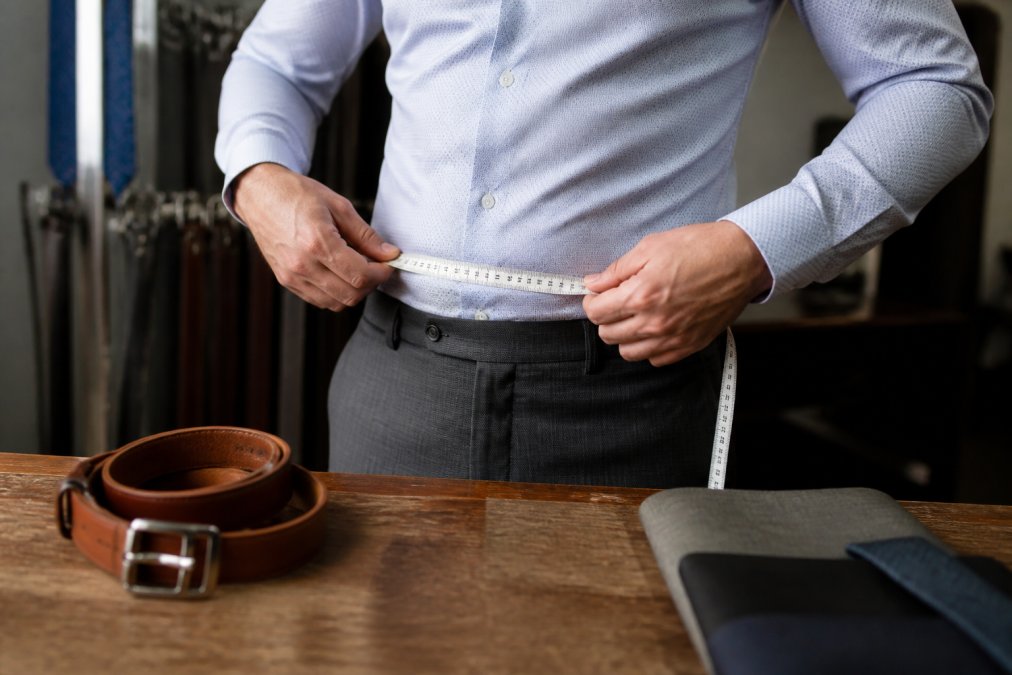
If you do not have a soft tape, use a piece of string. Mark where it meets, then lay it flat against a ruler. The result is the same.
How to Measure an Existing Belt for a Replacement
Measuring an old belt is the fastest way to get your size right, and it beats guessing every time. Lay the belt flat on a table and measure from the buckle end to the hole you use most. That distance is your belt size. Do not measure the full length of the belt, including the tail.
Here is the simple process:
- Lay the belt flat, buckle on the left
- Find the hole you fasten most often
- Measure from the inside edge of the buckle to that hole
- Round up to the nearest even inch
The middle hole matters most. A well-made belt has five holes, and the middle one should line up with your natural waist. If your old belt stretched over time, your true size may be slightly smaller than the belt reads.
Measure twice before you order. A replacement belt in the wrong size means a return, and no one wants that hassle.
How to Tell If a Belt Fits Correctly
A belt fits correctly when the middle hole sits at your natural waist and the tail end reaches the first or second belt loop. If you fasten on the last hole, the belt is too big. If you can barely reach the first hole, it is too small.
Check these signs for a proper fit:
- The buckle sits centered, not off to one side
- The tail tucks into a loop, not hanging loose
- The belt holds your pants up without cinching
- You can breathe and sit down with ease
- The leather shows no deep creases at the holes
A belt that fits well stays comfortable all day. You should not need to adjust it every hour.
Common Belt Sizing Mistakes to Avoid
The most common sizing mistake is ordering your pant size and hoping it works. It usually does not. Pant sizes vary by brand, and vanity sizing has pushed many labels smaller than the true measurement. A man who wears a 34-inch pant often needs a 36-inch belt, and that gap widens with thicker fabrics.
Other mistakes to avoid:
- Measuring over bare skin instead of over pants
- Using a stiff metal tape that will not bend around your waist
- Measuring the full belt length instead of buckle to hole
- Ignoring how different materials stretch over time
- Skipping the measurement and guessing
- Measuring at your natural waist instead of where the belt actually sits
Material stretching is the mistake most guides skip, and it is the one that changes what size you should order. Here is the mechanism behind it.
Leather is skin. It is made of collagen fibers that slide against each other when the belt is under tension. Every time you fasten the belt, the leather around the hole you use stretches a little. Over weeks and months, those fibers relax and the belt gets longer. Full-grain and top-grain leather stretch because the fiber structure is intact and flexible.
What this means for sizing:
- Top-grain leather: Order your measured size. Expect the belt to relax about half an inch over the first year of daily wear. The middle hole gives you room to move up or down as it stretches.
One more mistake worth naming: buying a belt without checking the brand's own size chart. Belt sizing is not standardized across makers. A 36 from one brand can measure 38 inches from buckle to middle hole, while a 36 from another measures 36.5. The chart on the product page is the only reliable source for that specific belt.
Troubleshooting Non-Standard Belts and Materials
Not every belt follows the same sizing rules. Body shape and where the belt sits on your torso matter just as much.
Body shape changes where the belt sits, and that changes the measurement. This is the part most guides skip. Two men can both wear a 34-inch pant and need different belt sizes because they wear the belt at different points on the torso.
- Longer torso: The belt often sits lower, closer to the hip. Measure at that lower point, not at the navel. The reading is usually one to two inches larger than a navel measurement.
- Shorter torso: The belt sits higher, closer to the natural waist. Measure there. The reading is usually smaller.
- Straight or athletic build: The belt line is fairly level. A single measurement works well.
- Rounder midsection: The belt tends to sit under the belly rather than across it. Measure at the point where the belt actually rests, which is often lower and larger than the navel measurement.
A simple way to find your true belt line: put on your pants, thread the belt through the loops, and fasten it where it feels comfortable.
For a replacement, match the belt width to your pant loops and match the material to how often you wear it. Daily wear favors top-grain leather.
How to Measure Belt Size Correctly: Final Checklist
Run through this checklist before you order, and you will get the fit right the first time. It takes two minutes and saves a return.
- Wear the pants you plan to pair with the belt
- Wrap a soft tape around your waist, over the pants
- Keep the tape level and snug, not tight
- Add 2 inches for the buckle and overlap
- For a replacement, measure buckle to middle hole
- Round up to the nearest even inch
- Match belt width to your pant loops
- Check the sizing chart for the specific brand
| Step | What to Do | Why It Matters |
|---|---|---|
| 1 | Wear your usual pants | Fabric thickness changes the reading |
| 2 | Wrap a soft tape at the belt line | A stiff tape gives a false number |
| 3 | Add 2 inches | Covers the buckle and overlap |
| 4 | Round up to even inches | Most belts come in even sizes |
| 5 | Check the brand chart | Sizing varies between makers |
Frequently Asked Questions
Is belt size the same as pant size?
No. Pant size measures your waist where the pants sit, while belt size measures around your waist over your clothing plus a few inches for the buckle and adjustment. A common rule is to add 2 inches to your pant size. For example, if you wear a 34-inch pant, you likely need a 36-inch belt. Always measure rather than assume, since brands vary.
How do I measure my waist for a belt?
Thread a tape measure through the belt loops of the pants you plan to wear. Wrap it around your waist over your shirt, keeping it level and snug but not tight. Note the measurement in inches. Add 2 inches to that number to find your belt size. This method works for both casual and dress belts.
Should I size up or down for a leather belt?
Size up. Leather belts can stretch slightly with wear, but a belt that is too small will not fasten comfortably. If you are between sizes, choose the larger one. You can always add an extra hole if needed, but you cannot add length. For top-grain leather, a proper fit from the start is best.
How much extra belt length should I have after the buckle?
Aim for 4 to 6 inches of belt tail past the buckle when fastened at your usual hole. This allows room for adjustment and looks tidy. If the tail is shorter than 4 inches, the belt may be too small; if it exceeds 6 inches, it may be too large and could look sloppy. Always check the middle hole for the best fit.