

Minimalist Leather Wallet Benefits: A 2026 Guide
Table of Contents
- Why Minimalist Leather Wallet Benefits Matter for Daily Carry
- Minimalist Wallet vs Traditional Wallet: Which Carry Style Fits You?
- Leather Wallet vs Nylon Wallet: Material Comparison and Trade-Offs
- How Many Cards to Carry in a Wallet Without Adding Bulk
- The Downsides of Minimalist Leather Wallets Nobody Mentions
- How to Care for a Leather Wallet So It Lasts Years
- Choosing Your First Minimalist Leather Wallet
- Frequently Asked Questions
Last Updated: October 14, 2026
Why Minimalist Leather Wallet Benefits Matter for Daily Carry
A minimalist leather wallet benefits your daily carry by reducing bulk, protecting your posture, and aging into a piece that looks better every year.
A minimalist leather wallet is a slim, front-pocket-sized wallet made from leather, designed to hold only your essential cards and a few folded bills. That separates a true minimalist carry from a wallet that is merely smaller than average.
The case for switching rests on three things:
- Less bulk. A flat profile disappears in a front pocket instead of forming a lump on your hip.
- Better comfort. Sitting on a thick back-pocket wallet tilts your pelvis over time. Front-pocket carry removes that pressure.
- Longevity. Full-grain and top-grain leather develop a patina rather than peeling like synthetic materials.
Most guides stop there, missing the trade-offs, capacity question, and care routine that decide whether your wallet lasts two years or ten.

Minimalist Wallet vs Traditional Wallet: Which Carry Style Fits You?
A minimalist wallet wins on comfort and portability; a traditional wallet wins on raw capacity.
Here is the practical comparison:
| Factor | Minimalist Wallet | Traditional Wallet |
|---|---|---|
| Typical capacity | 4-8 cards, a few bills | 10-20 cards, receipts, photos |
| Pocket placement | Front pocket | Back pocket |
| Bulk | Flat, slim profile | Bulky, visible outline |
| Sitting comfort | No pelvic tilt | Pressure on one hip |
| Best for | Daily essentials only | Heavy document carry |
A traditional wallet still makes sense if you carry membership, insurance, and business cards all at once. For most men, that stack is dead weight.
Try this instead: empty your wallet onto a table and count what you used in the past month. Most people land between five and seven cards, which fits a slim wallet comfortably.
Leather Wallet vs Nylon Wallet: Material Comparison and Trade-Offs
Leather outlasts nylon in appearance, while nylon wins on weight and water resistance. Leather is the better long-term investment because it can be conditioned, repaired, and re-stitched; nylon typically cannot.
The comparison comes down to five points:
- Durability. Leather grain tightens and flexes with use. Nylon frays at stress points and seams. Bonded or "genuine" leather holds up at first, then splits or peels at the fold.
- Appearance. Full-grain and top-grain leather develop a patina. Nylon looks new, then worn, with little in between. Vegan leather, usually a polyurethane or polyvinyl chloride coating over a fabric backing, tends to crack where it creases.
- Weight. Nylon is lighter, but the difference is measured in grams and rarely noticeable in a front pocket.
- Water resistance. Nylon and coated synthetics shed rain better than untreated leather. Leather can be treated with a conditioner or wax, but it will never be fully waterproof.
One insider point most reviews skip: genuine leather is a lower grade than full-grain or top-grain, and it often splits or peels at the fold. The Federal Trade Commission guidance on leather labeling explains how these terms are regulated, which helps you read a product page accurately.
Suede is another option, softer and more textured, but it stains easily and suits occasional wear better than daily carry.
Where RFID-Blocking Fits In
RFID-blocking is a feature, not a material, and worth understanding before you pay extra. Modern credit cards, passports, and some transit cards contain a radio chip readable at close range. An RFID-blocking wallet inserts a metal mesh layer that disrupts that signal.
What that means in practice:
- It is not a substitute for good habits. A blocked signal does nothing if you lose the wallet or hand your card to someone.
- It can interfere with tap-to-pay. Some blocking layers also stop your own contactless card from working at a terminal, so you may need to remove the card to pay.
- It adds a little bulk and cost. The shielding layer is thin, but not free.
- It matters most for travelers. Passports and some international transit cards are the most commonly cited targets. For a domestic daily-carry wallet holding a few chip cards, the practical risk is low.
If you want the feature, look for a wallet that states the shielding is built into the lining rather than sold as a separate sleeve.
How Many Cards to Carry in a Wallet Without Adding Bulk
Five to seven cards is the sweet spot for most minimalist wallets. Beyond that, a stack bows the leather and turns a flat profile into a bulge. The hard part is deciding which cards earn a spot.
Run a Two-Week Wallet Audit First
Before you buy anything, empty your current wallet onto a table and separate the contents into three piles:
- Used in the last two weeks. Your daily drivers: primary debit or credit card, driver's license, transit or building card, and one or two loyalty cards.
- Used in the last six months but not the last two weeks. Occasional cards: a backup credit card, health insurance card, or membership card.
- Not used in six months or more. Forgotten gift cards, expired loyalty cards, old business cards, receipts, and anything you cannot identify.
Pile one goes in the new wallet. Pile three goes in a drawer or the trash. Pile two is the judgment call.
Decide What Earns a Slot
A simple rule: one primary debit or credit card, one backup card, a driver's license, a transit or building card, and one or two loyalty cards. Everything else belongs in a drawer or phone app.
For pile two, ask three questions:
ILC Men’s Top-Grain Leather Bifold Wallet →
- How often do I need it in hand? A health insurance card you use twice a year can live in a glove box or desk drawer.
- Can it live on my phone? Most loyalty programs, transit passes, and even some insurance cards have digital versions.
- What happens if I leave it home? If the answer is "nothing," it does not need a slot.
Three habits keep capacity under control:
- Remove receipts weekly instead of letting them accumulate
- Digitize loyalty cards into your phone
- Keep only one backup card, not three
Transition Gradually, Not Overnight
The most common mistake is moving everything over on day one, then blaming the slim wallet when it feels cramped. Try a two-week transition:
- Week one: Carry the new wallet with your pile-one cards only, and keep the old wallet in a bag or at home as a safety net.
- Week two: Add one card from pile two if you found yourself needing it. Leave the rest behind.
- After two weeks: If you have not reached for the old wallet, you are done. If you have, you have learned exactly which card belongs in the new one.
Cash Capacity Matters Too
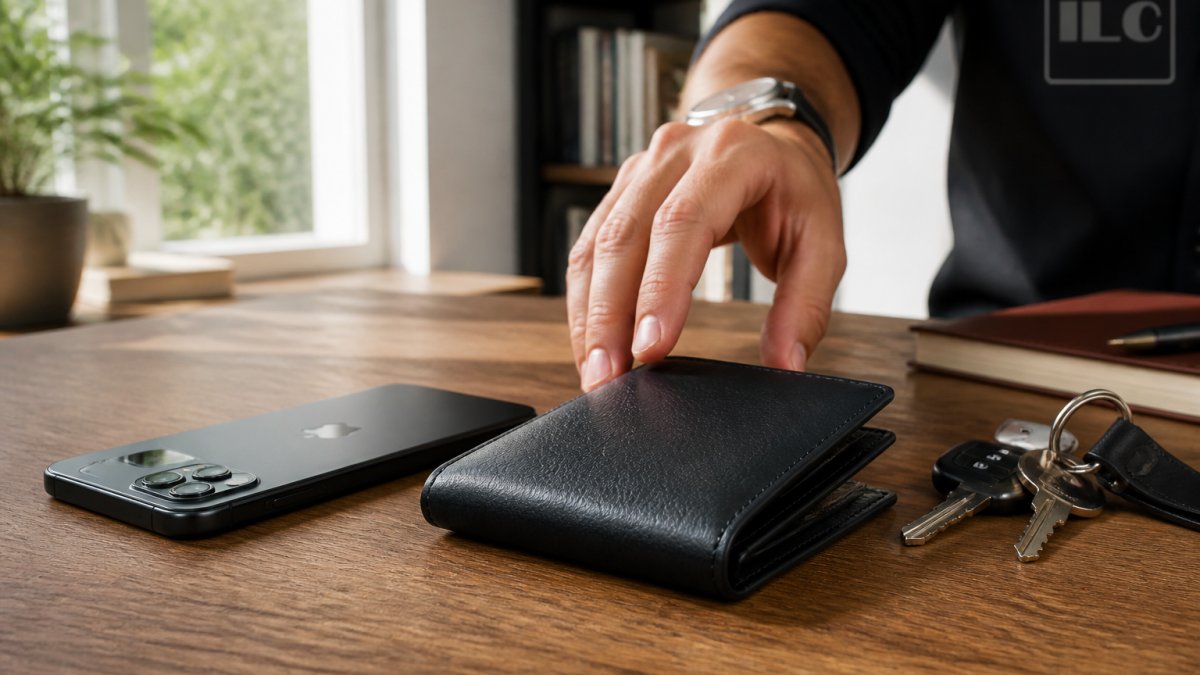
A minimalist wallet handles a few folded bills well. If you routinely carry a thick roll of cash, a bifold with a dedicated cash compartment will serve you better than an ultra-slim card holder. For example, the ILC Men's Top-Grain Leather Bifold Wallet pairs seven card slots with a separate cash compartment, so bills stay apart from your cards without adding bulk.
The Downsides of Minimalist Leather Wallets Nobody Mentions
A minimalist leather wallet is not right for everyone. The main trade-offs are limited capacity, a break-in period, and a higher upfront cost than a synthetic alternative.
Here is what to expect:
- Limited capacity. If you carry more than eight cards, you will feel the constraint daily.
- Break-in time. New leather is stiff. It softens over the first few weeks as it molds to your pocket and your card stack.
- Cost. Quality leather costs more than nylon. You are paying for material grade and construction, not a logo.
- Less forgiveness. A slim wallet has no room for a random receipt or a spare key card.
That last point surprises people. A traditional wallet absorbs clutter; a slim wallet does not, exactly why it works, and why some men return to a bulkier design.
How to Care for a Leather Wallet So It Lasts Years
Leather wallet care takes about ten minutes every three to six months and is the biggest factor in how long your wallet lasts.
The routine is straightforward:
- Empty it. Remove cards and bills so you can reach the seams and corners.
- Wipe it down. Use a dry or barely damp cloth to lift dust and oils.
- Condition sparingly. A small amount of leather conditioner, worked in with a fingertip, is enough. More is not better.
- Let it absorb. Give it an hour before reloading.
- Store it flat. Do not leave it compressed under heavy objects.
Keep it away from prolonged direct heat and from soaking wet conditions. The American Leather Chemists Association resources on leather care cover the material science behind why moisture balance matters.
A leather wallet that gets this routine will develop a patina, a deepening of color and sheen from handling.
Choosing Your First Minimalist Leather Wallet
Start with capacity, then materials, then construction. Choosing your first minimalist leather wallet is easier in that order, because capacity eliminates most of the field before you compare stitching or price.
Use this checklist before you buy:
- Capacity: Does it hold your real card count, plus one spare?
- Material: Is it full-grain or top-grain leather, not bonded or genuine?
- Construction: Are the stitches even, tight, and reinforced at the fold?
- Profile: Does it sit flat in a front pocket with cards loaded?
- Returns: Can you send it back if the fit is wrong?
A 30-day return policy removes most of the risk: if the wallet arrives too stiff or the capacity is off, you can exchange it.
One more consideration: repairability. A stitched leather wallet can be re-stitched by a cobbler; a bonded or heat-sealed one cannot.
The challenge with any wallet purchase is that you cannot judge capacity, stiffness, or grain from a product photo alone. Browse the ILC Men's Top-Grain Leather Bifold Wallet with its seven card slots and dedicated cash compartment, or explore the full range of premium men's accessories.
Frequently Asked Questions
What are the benefits of a minimalist leather wallet?
A minimalist leather wallet combines a slim profile with full-grain or top-grain leather durability. The main benefits are reduced bulk in your front pocket, less strain on your back compared to sitting on a thick bifold, quicker access to cards, and a timeless look that ages into a patina rather than cracking. Because there are fewer slots and less material, the wallet stays flat and comfortable for all-day carry.
Is a minimalist wallet better than a traditional wallet?
It depends on what you carry. A traditional bifold holds more cards, receipts, and cash, but it also creates bulk that pushes you toward back-pocket carry. A minimalist wallet forces you to keep only essentials, which reduces sitting discomfort and keeps your silhouette clean. If you rarely carry more than six cards and some bills, a minimalist design is usually the better daily choice.
How many cards should a minimalist wallet hold?
Most men carry four to six cards daily: an ID, one or two credit or debit cards, a transit or office access card, and maybe an insurance card. A wallet with seven card slots, like the ILC Men's Top-Grain Leather Bifold Wallet, gives you room without forcing you to stack cards so thick that the leather stretches. Anything beyond eight cards usually belongs in a separate card holder or at home.
How do you keep a leather wallet from getting bulky?
Empty it weekly. Remove receipts, loyalty cards you never use, and any card you have not swiped in a month. Avoid folding cash into thick wads; keep bills flat in a dedicated compartment. When you do add a new card, take one out. Leather stretches to fit what you put in it, so a wallet packed tight on day one will stay stretched and bulky even after you thin it out.