

Ashland Leather Alternatives for Men: 5 Solid Picks
Table of Contents
- What Men Actually Want From an Ashland Leather Alternative
- Ashland Leather Alternatives at a Glance: Specs and Prices
- The Top-Grain Leather Wallet That Handles Daily Carry
- Full-Grain Leather Wallets for Men: What the Grade Actually Changes
- Belts That Pair With the Wallet: Fit, Buckles, and Construction
- The Best Practical Wallet for Men Who Carry Light
- Non-Leather Wallet Alternatives for Men: Cork, Recycled, and Vegan
- Warranty, Repairs, and What Ownership Really Costs
- Frequently Asked Questions
Last Updated: October 21, 2026
What Men Actually Want From an Ashland Leather Alternative
Most men shopping for an Ashland Leather alternatives list want the same three things: honest leather, a wallet that survives daily carry, and a price that reflects what's actually inside the product. This guide from I Look Classy breaks down five solid picks by construction, material, and ownership cost.
The first thing to understand is that "Ashland alternative" gets used loosely. Ashland Leather is known for shell cordovan wallets built on Horween leather from Chicago, and that reputation comes from a specific material and a specific construction style. An honest alternative doesn't have to match shell cordovan.
That's the tension running through this whole category. Shell cordovan and Chromexcel get the attention because they patina beautifully, but most men carry a wallet into an office, a truck cab, or a gym bag, not a collector's shelf.
Ashland Leather Alternatives at a Glance: Specs and Prices
Most alternatives articles either talk about Ashland Leather itself or pivot to non-leather wallets. What's missing is a direct, men-focused comparison of specific leather makers that compete with Ashland on construction, materials, and price. The table below does that.
| Maker / Product | Price (USD) | Leather | Construction | Card Capacity | Warranty / Repairs | Best For |
|---|---|---|---|---|---|---|
| Ashland Leather Johnny the Fox (reference) | About $200-$250 | Horween Chromexcel | Hand-stitched in Chicago | 6-8 cards plus cash | Limited warranty; repairs handled case by case | Baseline for comparison |
| Ashland Leather Shell Cordovan Bifold (reference) | About $350-$450 | Horween shell cordovan | Hand-stitched in Chicago | 6-8 cards plus cash | Limited warranty; repairs handled case by case | Premium shell cordovan benchmark |
| ILC Top-Grain Leather Bifold Wallet | $68.99 | Top-grain leather, microfiber lining | Machine-stitched, slim bifold | 7 card slots plus cash compartment | 30-day returns; no stated repair program | Budget daily carry |
| ILC Top-Grain Leather Ratchet Belt | $59.99 | Top-grain leather, zinc alloy buckle | Cut-to-fit, hidden ratchet track | Not applicable | 30-day returns; no stated repair program | Adjustable fit without holes |
| ILC Top-Grain Leather Classic Buckle Belt | $59.99 | Top-grain leather, zinc alloy buckle | Cut-to-fit, hidden track, removable buckle | Not applicable | 30-day returns; no stated repair program | Dress and business casual |
| ILC Brown Classic Buckle Belt & Black Wallet Gift Set | $125.99 | Top-grain leather | Belt plus wallet, gift box included | 7 card slots plus cash compartment | 30-day returns; all accessories and packaging required | Gifting |
| ILC Brown Ratchet Belt & Black Wallet Gift Set | $125.99 | Top-grain leather | Belt plus wallet, gift box included | 7 card slots plus cash compartment | 30-day returns; all accessories and packaging required | Gifting with a modern buckle |
A few notes on reading the table. The Ashland rows are reference points, not recommendations; they show what the premium tier buys you in leather and construction. The ILC rows are the practical alternatives this guide covers in detail. Prices for Ashland products vary by leather and configuration, so treat those ranges as approximate.

What the table makes clear is the trade-off at each tier. At the top, you pay for Horween shell cordovan or Chromexcel, hand-stitching, and a Chicago-made product with a limited warranty.
The Top-Grain Leather Wallet That Handles Daily Carry
The ILC Men's Top-Grain Leather Bifold Wallet is the best practical wallet for men who want organization without bulk.

Seven card slots cover the realistic load: a couple of credit cards, a debit card, an ID, a transit card, and a loyalty card or two.
What most guides miss is that top-grain leather is a deliberate choice, not a compromise. Full-grain keeps the entire hide surface and shows every natural mark.
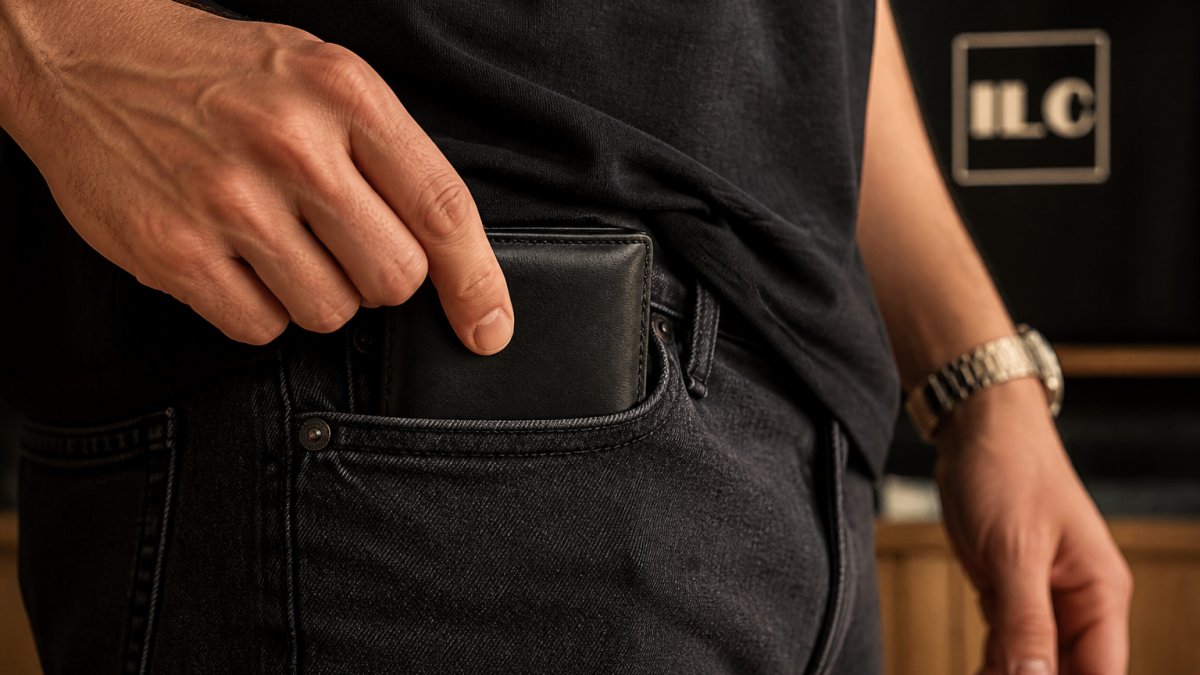
The honest limitation: top-grain won't develop the deep, glassy patina that shell cordovan does over years. It will break in, soften at the fold, and show creases where you sit on it. That's normal wear, not failure.
Full-Grain Leather Wallets for Men: What the Grade Actually Changes
Full-grain leather is the outermost layer of the hide with the grain intact, and it's the grade most often cited in discussions of full-grain leather wallets for men. It's denser, more breathable, and ages into a visible patina because the surface hasn't been sanded away.
Here's the part that gets oversold. Full-grain is more durable in theory, but construction decides whether a wallet lasts. A full-grain wallet with poor stitching quality fails at the seams long before the leather wears through. A well-built top-grain wallet with clean stitching and a proper lining often outlasts a cheap full-grain one.
For men comparing full-grain leather wallets for men against a top-grain option, the practical question is this: do you want a wallet that looks broken-in and characterful within a year, or one that stays clean and uniform? Full-grain and shell cordovan lean toward the first. Top-grain leans toward the second. Neither is wrong.
Belts That Pair With the Wallet: Fit, Buckles, and Construction
A wallet is half the equation. The other half is the belt holding the whole outfit together, and fit is where most men get it wrong.
The ILC Men's Top-Grain Leather Ratchet Belt at $59.99 uses a hidden ratchet track for small, precise adjustments with no visible belt holes. The ILC Men's Top-Grain Leather Classic Buckle Belt at $59.99 trades the ratchet look for a classic zinc alloy buckle while keeping the hidden track underneath. Same price, different visual register.

Measure around your body over your trousers where the belt will sit, not your labeled trouser size. That single step prevents most sizing returns.
The trade-off worth naming: cut-to-fit belts are less forgiving than pre-punched belts if you guess wrong. Measure twice.
ILC Men’s Top-Grain Leather Bifold Wallet →
The Best Practical Wallet for Men Who Carry Light
Minimalist carry has a real ceiling. If you're down to four cards and a folded bill, a slim bifold like the ILC wallet is genuinely all you need, and the seven card slots leave room to grow without forcing you into a second wallet later.
What a light carrier should avoid is a card holder with no cash compartment. Cash still shows up: a tip, a parking meter, a cash-only lunch spot. The bifold's dedicated cash compartment handles that without turning the wallet into a brick.
The pocket comfort math is simple. A bifold with seven slots and a cash sleeve stays flat when loaded sensibly. Load all seven slots plus a thick bill fold and it will bulge in a front pocket. Keep it to four or five active cards and it carries clean.
Non-Leather Wallet Alternatives for Men: Cork, Recycled, and Vegan
Non-leather wallet alternatives for men are worth taking seriously, and the honest framing is this: they solve an ethical and material preference, not a durability problem. Cork, recycled materials, and vegan leather each have a distinct feel and a distinct weakness.
- Cork: Light, water-resistant, and naturally textured. It creases differently from leather and can crack at sharp folds over time.
- Recycled materials: Often fabric-based, so they feel softer and more flexible, but they stain more easily and don't develop patina.
- Vegan leather: The quality range is enormous. Some are durable coated fabrics; others peel at the edges within a year.
Where non-leather wins is clear conscience and often lower weight. Where it loses is longevity and repairability. A leather wallet can be conditioned and kept going. Cork and coated fabrics generally can't be repaired once they split.
If you're choosing non-leather for ethical reasons, that's a legitimate trade. Just go in knowing you're trading lifespan for principle, not getting both.
Warranty, Repairs, and What Ownership Really Costs
Ownership cost is the angle most alternatives articles skip.
Start with warranty terms. Most leather wallet makers offer a limited warranty against manufacturing defects, typically for one to two years, and most exclude normal wear, stretching, and damage from overloading.
Repairability depends on construction. A wallet stitched with a lockstitch at the fold and along the card slot edges can often be restitched by a leatherworker if a seam fails.
Care cost is small but real. A tin of leather conditioner runs roughly $10-$20 and lasts years when applied a few times a year. Saddle soap for occasional cleaning is similar.
Here is the cost-per-year math with the numbers from this guide. The ILC bifold at $68.99 over five years of normal carry is about $14 per year.
On durability and product lifespan: top-grain leather with clean stitching typically holds up for years of normal pocket carry. The variables that shorten that are overloading the card slots, storing it in a hot car, and never conditioning it. Treat it reasonably and it earns its price. For buyers comparing tiers, the practical rule is to match warranty and repair terms to how hard you are on a wallet, not to how much you want to spend.
Frequently Asked Questions
Is Ashland Leather a good brand to compare against?
It has a strong reputation for handcrafted leather goods, which is exactly why it makes a useful benchmark. When you compare Ashland Leather alternatives for men, check four things: leather grade, stitching consistency, hardware quality, and whether the maker publishes clear care and return terms. A brand earns its price through construction, not reputation alone. Look for even stitching, a lined interior, and a strap or wallet edge that is finished rather than raw. If a maker can explain its leather source and tannery, that is a good sign the material is what they claim.
What is the most practical wallet for men?
For most men, a slim bifold with six to eight card slots and a separate cash compartment covers everyday needs without bulk. The ILC Men's Top-Grain Leather Bifold Wallet at $68.99 fits that brief: seven card slots, a dedicated bill section, and a profile thin enough for front-pocket carry. Practicality comes down to three things: how many cards you actually carry, whether you still use cash, and whether the wallet sits comfortably when seated. If you carry fewer than five cards, a card holder will serve you better than a full bifold.
Is full-grain leather better than top-grain leather for a wallet?
Full-grain keeps the entire hide surface, so it develops a deeper patina and tends to last longer with care. Top-grain has the outermost layer sanded away, which makes it more uniform and slightly more resistant to visible scuffs. Neither is a bad choice. Full-grain rewards patience during break-in and shows character over years. Top-grain looks consistent from day one and needs less conditioning. For a first serious wallet, top-grain is the lower-risk pick. For a wallet you intend to keep a decade, full-grain is worth the extra attention.
What is the best non-leather wallet for men?
Cork and recycled-material wallets are the two strongest non-leather options. Cork is lightweight, water-resistant, and has a soft, suede-like feel. Recycled-material wallets, often built from reclaimed plastics or textile waste, are easy to wipe clean. Both suit men who want a cruelty-free wallet without sacrificing structure. Check the stitching and lining before buying, since non-leather wallets vary more in build quality than leather ones. Expect a shorter lifespan than full-grain leather, typically two to four years of daily use.
How do you choose a durable everyday wallet?
Start with the leather grade and the stitching. Full-grain and top-grain leather both outlast bonded leather, and tight, even stitching at the fold is where most wallets fail first. Check that the interior is lined, since an unlined card slot stretches out quickly. Then match capacity to habit: seven card slots plus a cash compartment suits most men, while a card holder works if you carry four cards or fewer. Finally, confirm the return window and whether the maker offers repairs. A 30-day return policy removes most of the risk.